Complete all of your mechanical estimates in one place
Countfire provides you with the tools to complete estimates faster, and with higher accuracy. For mechanical estimators who want greater project understanding.
The basics
What is mechanical estimating software?
Mechanical estimating software helps estimators produce accurate, priced proposals for mechanical services: HVAC, pipework, and ductwork. It brings takeoff, measurement and pricing into one tool, replacing the slow cycle of counting from drawings, measuring with a scale rule and building the estimate separately in Excel.
Countfire counts symbols across every drawing in a project automatically, measures linear runs such as pipework and ductwork, and turns those quantities into a client-ready estimate with a full pricing breakdown you can split by area.
Intelligent estimating
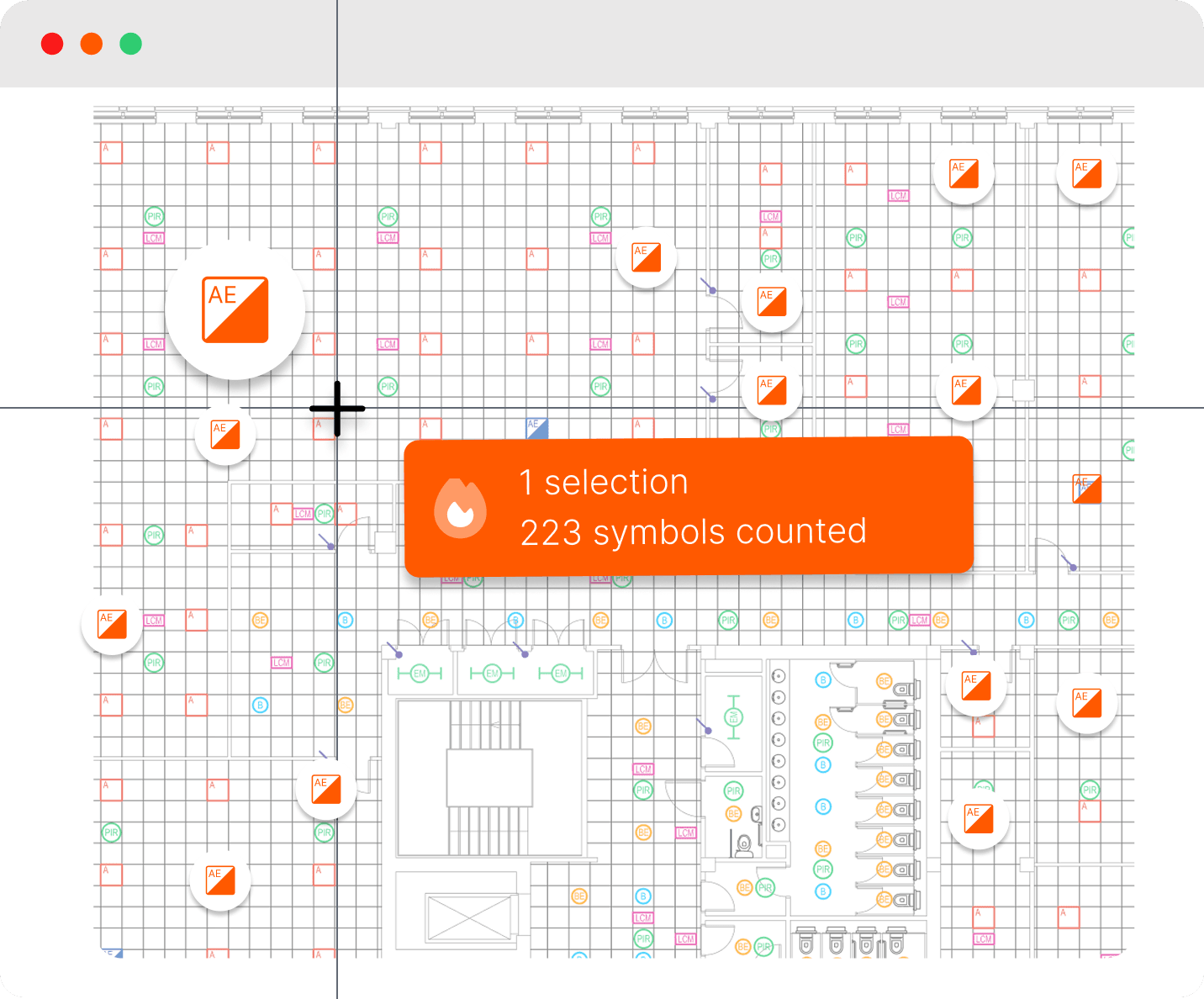
Measure drawings effectively
With takeoff tools such as Linear Measurements, you can easily count, measure and draw symbols and lengths across all drawings within your project. With added accuracy checks.
Project management
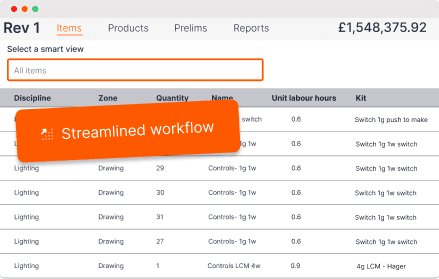
Mechanical estimating in one tool
From automated takeoff, to a client-ready Excel estimate where you can split out or exclude areas in your pricing breakdown.
Cloud-based estimating
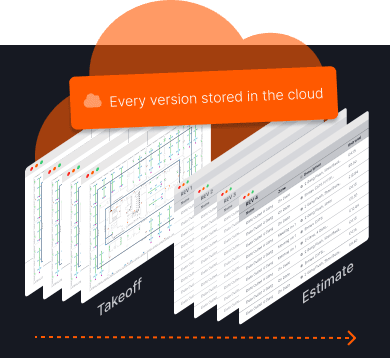
Go fully digital and collaborate with your team
Cloud-based access means you can easily collaborate with your team in multiplayer estimate mode. With digital records of every estimate.
Revise drawings
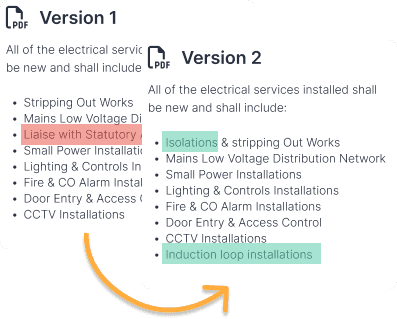
Copy items, and adapt drawings for the mechanical estimate
Copying items allows you to reuse work from previous estimates and deal with revised drawings. Add new items, and show what's been added in your report.
Mechanical estimators who love Countfire





The future of estimating
Why Countfire for mechanical estimators?
99% accuracy
Countfire has been built with accuracy at its core, so you can win more work and remove manual errors.
Built by estimators
As former electrical estimators ourselves, we know first-hand what it takes to win accurate estimates in today's world.
World-class support
Our product specialists are there to support via live chat, phone, or email so you always get your estimates in on time.
Fully cloud-based
From day one Countfire has been a fully cloud-based tool. Access estimates from wherever you work.
Collaborate easily
Work together on estimates to increase team visibility and meet client deadlines.
Continually improved
Working in two-week cycles, we release and share hundreds of platform enhancements each year.
Frequently asked questions
Who is Countfire for?
Countfire is for mechanical estimators, quantity surveyors and estimating managers at mechanical and M&E contractors, from specialist subcontractors to national businesses. Mechanical contractors including SES and Mitie use Countfire in their estimating.
It is fully cloud-based, with estimating teams using it all over the world. That also makes it practical for teams who split estimates between offices or work on the same tender at once, using multiplayer estimate mode.
If your tenders involve counting mechanical symbols floor by floor and measuring pipe and duct runs by hand, Countfire takes on the repetitive work so you can focus on the pricing decisions.
How does mechanical estimating software work?
The workflow runs from drawing set to submitted estimate:
- Upload your drawings. Add the project's PDF drawings, from single floors to full multi-building sets.
- Count and measure. Automated takeoff counts mechanical symbols across all drawings, while linear measurement tools handle pipework, ductwork and other runs. Accuracy checks flag anything uncounted.
- Handle revisions without starting again. When revised drawings arrive, copy items across, adapt the takeoff and show exactly what has been added in your report.
- Build the estimate. Quantities flow into the estimate, where you can price items, reuse rates from previous projects and split out or exclude areas in the pricing breakdown.
- Export and submit. Produce a client-ready Excel estimate, with a digital record of every version saved to the cloud.
What can be estimated by mechanical estimating software?
Countfire handles the mix of counted items and measured runs that make up a mechanical estimate. Anything drawn as a symbol can be counted automatically, and anything drawn as a run can be measured.
HVAC and ventilation
Count grilles, diffusers, fan coil units, AC units, extract fans and other ventilation components across every drawing in one pass, then measure the ductwork runs that connect them. Splitting quantities by area makes it easy to price floor by floor or zone by zone.
Pipework
Measure heating, chilled water and other pipework runs with the linear measurement tool, drawing straight lines or bends to follow the route on the drawing. Each run is itemised, so your estimate shows exactly where every metre came from.
Ductwork
Trace supply, extract and fresh air ductwork routes digitally instead of with a scale rule. Measurements are recorded against the drawing, giving you a defensible breakdown when quantities are queried.
Plant and equipment
Take off boilers, chillers, AHUs, pumps and other plant items across the project, with every counted item traceable back to its location on the drawing.
How can mechanical estimating software save me time?
Mechanical takeoff is slow because it combines two manual jobs: counting symbols and measuring runs. Countfire automates the counting entirely and turns measuring into a fast digital task, with every quantity itemised as you go.
Where the time comes back:
- Whole-project takeoff. Symbols are counted across every drawing at once, not one drawing at a time.
- Revisions without rework. Copy items from previous versions, adapt the drawing and report only what has changed, rather than re-doing the takeoff.
- Pricing that remembers. Reuse rates from previous estimates for your regularly priced items.
- One workflow. Quantities flow straight from the drawing into a client-ready Excel estimate, removing a common source of errors.
- Team estimating. Multiplayer estimate mode lets several estimators work the same tender at once, useful when the deadline is tight.
Craig Reid at Dextra Group saw his team go from around 10 drawings a week to 40 with four estimators. Less time counting and measuring means more tenders out the door.
Loved by customers
"Being able to spend less time and resources on this aspect of the job really helps us to keep our costs down and lowers our risk. We can focus our time better."
"Countfire is the biggest time-saving system we've ever implemented into our business."

Paul Williams
Eclipse Integration
"Game Changer. Saves more time than I care to count."

Ryan Beck
Winters Electrical
"Countfire is now a fundamental part of our estimating experience."

Matt Goodacre
MJLonsdale
"Countfire really helps - we know it's going to be accurate. The built-in checks are excellent and picked up everything."

David Leslie
Designplan Lighting
"The management team saw straight away that it was a great product which would save me time and enable me to focus on the other parts of my job. They were really impressed."

Chad Baumgartner
Graybar
"If my company were to pull the plug on Countfire, I'd pay for it myself - that's how valuable it is to me."

Ronan Carroll
Lucid Electric
"If you want something that is agile, accurate and is economical then you have to go with Countfire."

Eric Bronson
Anixter
"Countfire is extremely easy to use. It's quick, no wasted paper, and you've got records of what you've done."

Mike Tydd
ROC Group
"If we were counting up to 10 drawings a week previously as a team, I'd say we can now easily get 40 completed in a week in Countfire with only 4 estimators. That's a huge difference for us."

Craig Reid
Dextra Group
"We'll keep using Countfire as we grow. It's fast, reliable, and we know we can trust the results."

Eddy Tobaji
Adept Fire
"The training and support from Countfire has been exceptional and the time savings our teams have seen speak for themselves."

Travis Francher
Wachter