Electrical Estimating Software: 2026 Guide

Estimating is one of the most time-consuming parts of running an electrical contracting business.
The right software reduces that time, improves accuracy, and lets your team bid on more work without adding headcount. The wrong one adds complexity without solving the underlying problem.
This guide covers six most widely used tools available to electrical estimators in 2026; what each does well, where it falls short, and who it suits. We’ve kept it practical with no rankings based on affiliate fees, and no filler features listed as key selling points.
What to look for in electrical estimating software
Before comparing tools, it’s worth being clear on what the software actually needs to do for your business.
Takeoff capability is the starting point. Can it take quantities directly from your drawings, and does it do that automatically or manually? Automated counting suits high-volume, symbol-heavy jobs. Manual mark-up suits teams that like to have precision and control over what gets counted and how.
Estimate output matters too. Some tools handle takeoff only, while others produce a complete estimate in one workflow. Neither is wrong, but it’s worth knowing which you’re buying and whether it integrates with your existing pricing process.
Electrical-specific features such as labour constants and material libraries all separate purpose-built tools from general construction platforms. Worth verifying what’s built in versus what requires configuration.
Ease of adoption is consistently underestimated. Software that takes months to implement delivers value slowly.
Support quality often makes or breaks the experience. A support team that understands electrical estimating is significantly more useful than a generic help desk.
The tools
1. Bluebeam Revu
Best for: Document management, precise manual takeoff, and team collaboration on complex projects.
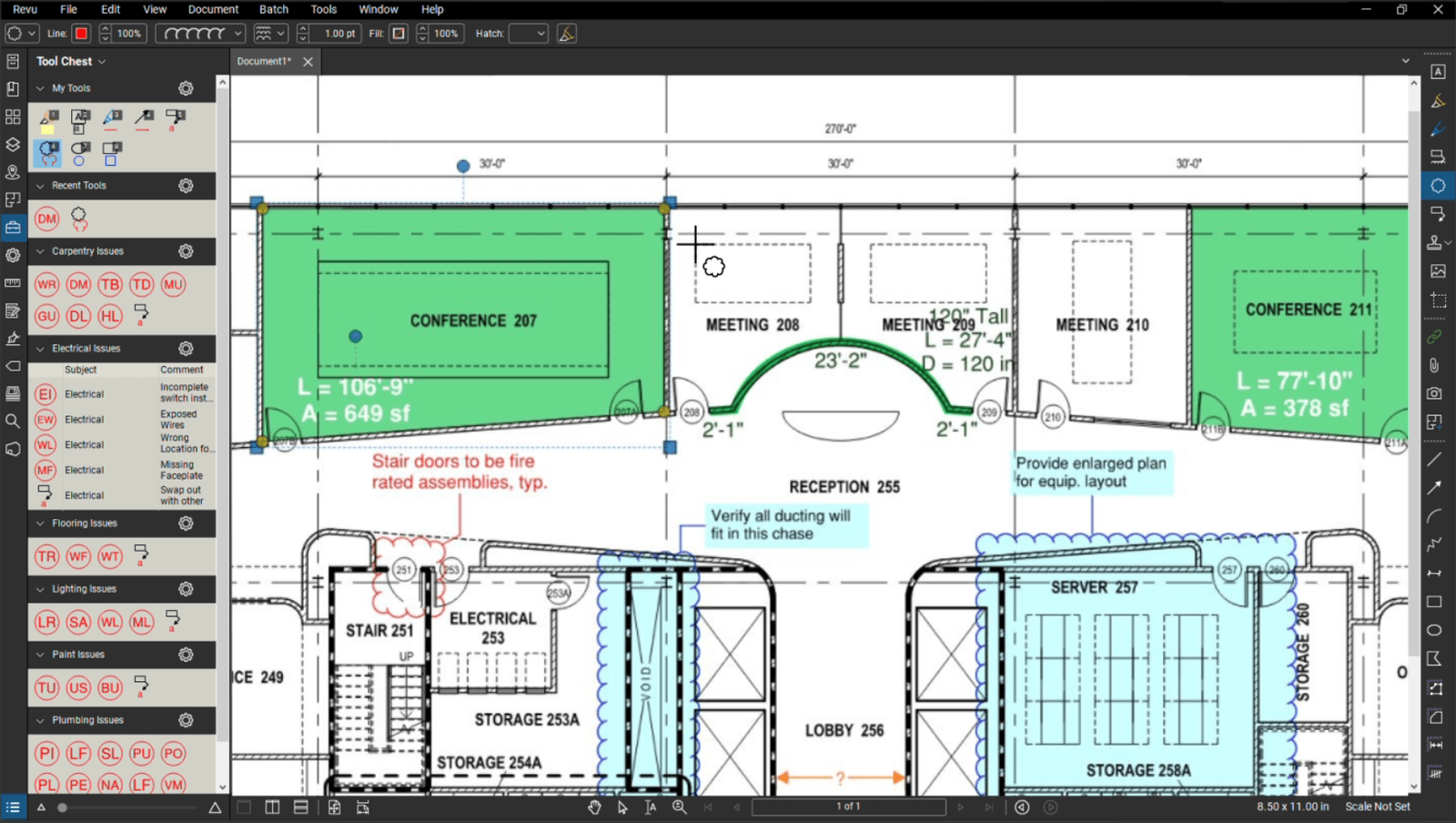
Bluebeam Revu is a PDF workflow and document management platform widely used across construction, including electrical estimating. Its strength is precision and control; estimators can mark up drawings, annotate symbols, add measurements, and manage drawing revisions in a structured, auditable way.
For teams working across multiple sites or collaborating on large, drawing-heavy projects, Bluebeam’s document management capabilities are a genuine differentiator. Revu Studio allows real-time collaboration on drawings, reducing the version-control issues that create errors downstream in the estimating process.
Where Bluebeam sits in the workflow: it’s primarily a takeoff and document mark-up tool. It doesn’t produce a priced electrical estimate natively, and quantities marked up in Revu are typically transferred into a separate pricing tool. For teams that want full control over their mark-up process before pricing, that’s a deliberate workflow choice, not a limitation. For teams that want a single end-to-end tool, it requires integration with other software.
Suits: Estimators and project teams who want precise, auditable drawing mark-up and document control as a foundation for their estimating workflow, particularly on complex or large-scale projects.
Free trial: Yes.
2. Countfire
Best for: Electrical estimators who want to reduce takeoff time significantly.
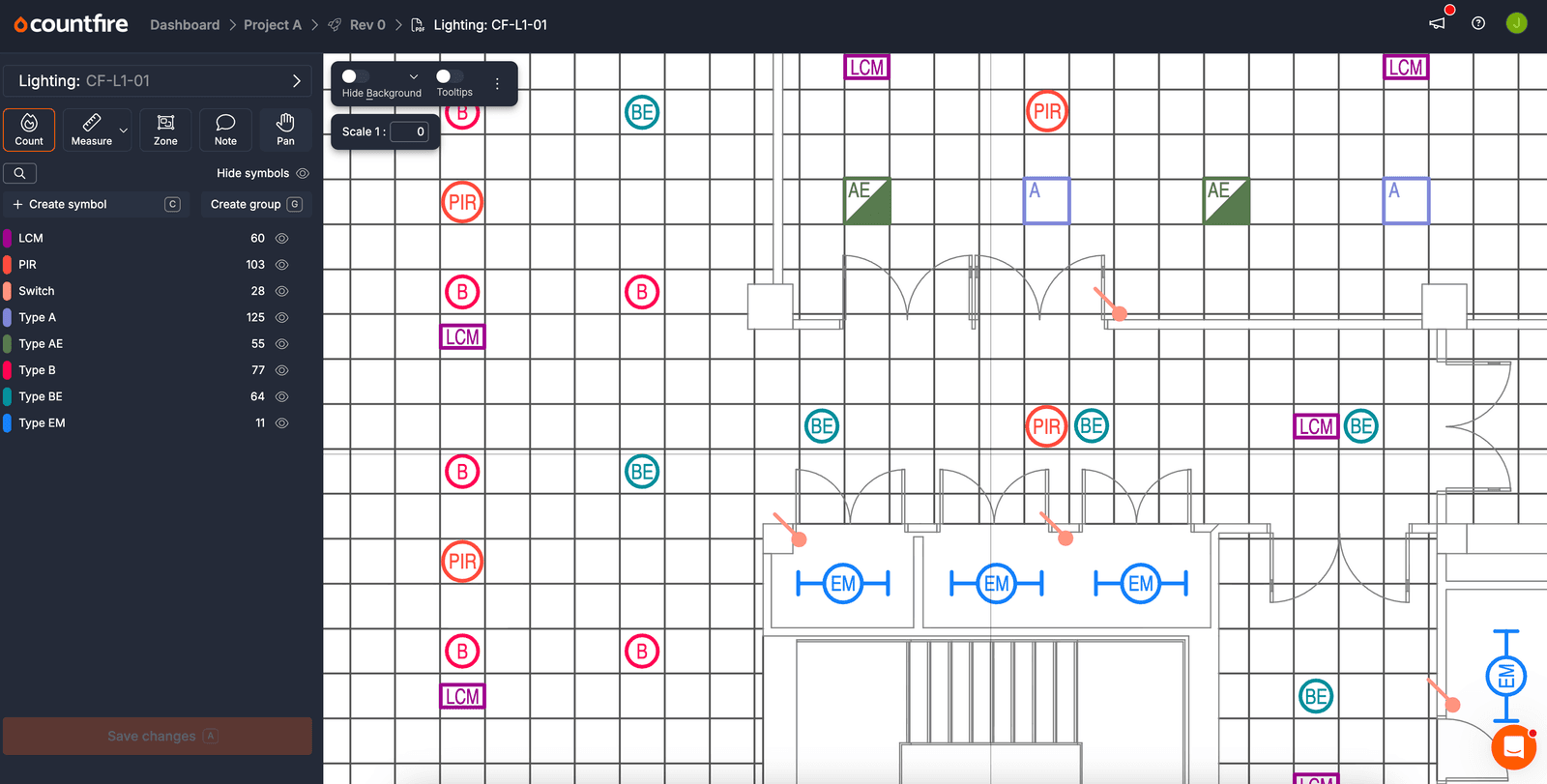
Countfire is purpose-built for electrical estimating. Its core function is automated symbol counting; you identify a symbol type once, and Countfire finds and counts every instance across all drawings in a project. On large jobs with repetitive symbol types, this significantly reduces takeoff time from hours to minutes.
The software is cloud-based, which means it works across locations and team members without the friction of a desktop-only installation. Built-in check sheets let estimators verify counts by symbol type before finalising, which adds an audit trail most tools don’t offer.
Support is provided by a team with backgrounds in electrical estimating - they understand the work, not just the software.
Countfire is built specifically for electrical estimating. If you need multi-trade capability or full project management within a single platform, it’s likely not the right fit.
Suits: Electrical estimators doing any high-volume PDF takeoffs who want to reduce time spent on manual counting.
Free trial: Yes.
3. Ensign
Best for: UK contractors already familiar with the tool.
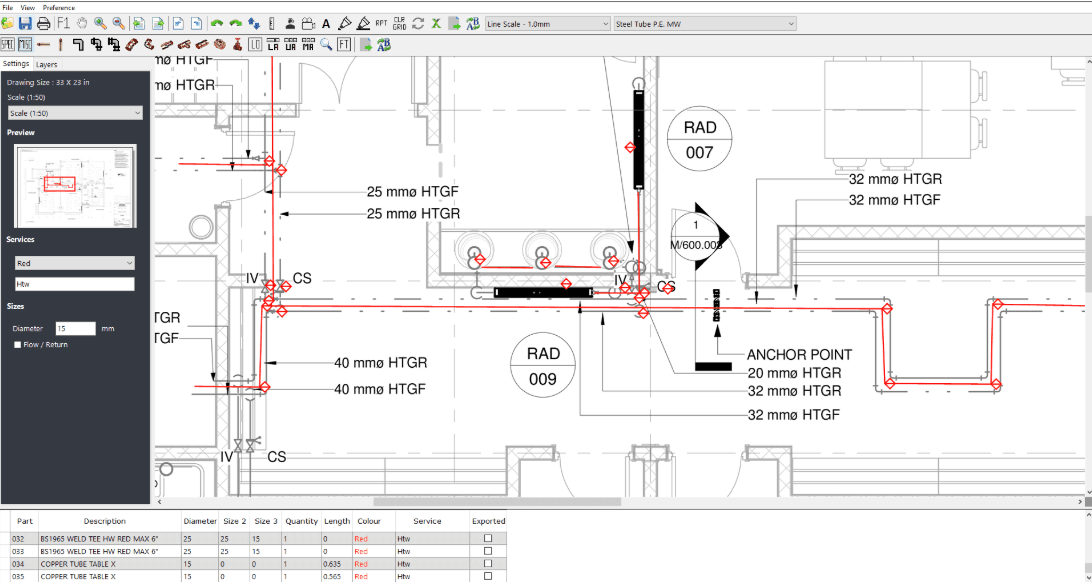
Ensign has been a fixture in UK electrical estimating for decades. Many estimators trained on it and know it well; that familiarity has value, particularly in businesses where consistent output matters more than speed of adoption.
It covers the essentials: material libraries, labour rates, pricing, and estimate output. The limitation is that takeoff remains largely manual, and the software is mostly desktop-based, although they state on their website it can be cloud-based and used anywhere if flexibility is needed. Product development has been a little slower to respond to changing market expectations compared to cloud-based tools.
Suits: UK electrical contractors where existing familiarity with Ensign outweighs the case for switching.
Free trial: Free demo available.
4. Procore
Best for: General contractors needing full project management.
Procore is a construction management platform used for project scheduling, document control, RFIs, site communication, and more. It includes an estimating module, but estimating is one feature among many rather than the core product.
For electrical contractors whose main need is faster, more accurate estimating, Procore could be an over-investment. The estimating module is designed for general contractors and lacks the electrical-specific capability that specialist tools provide.
Suits: General contractors who need integrated project management across the full construction lifecycle.
Free trial: Demo available on request.
5. Stack
Best for: Multi-trade contractors wanting a single takeoff tool.
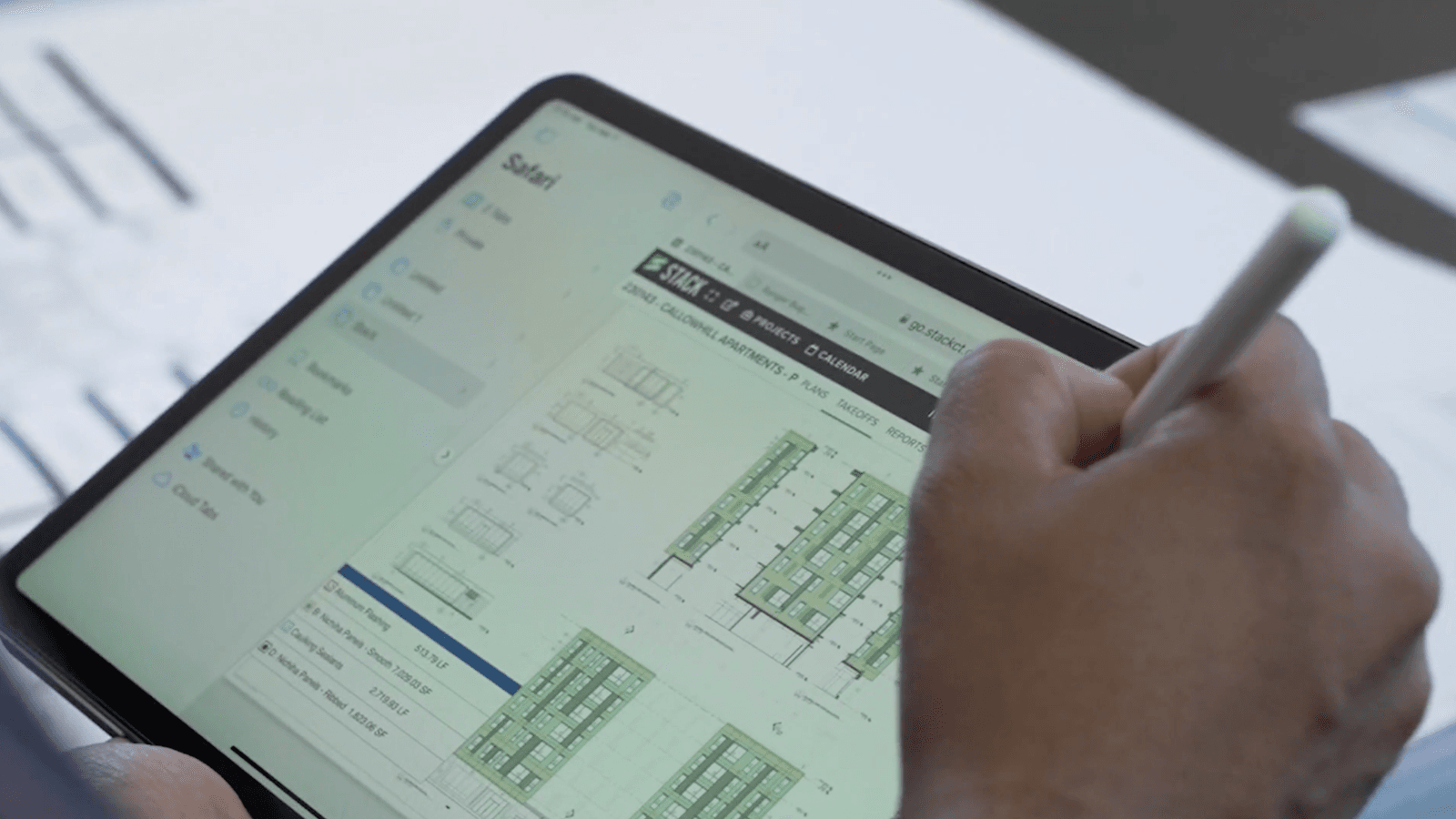
Stack is a cloud-based takeoff and estimating platform built for use across multiple trades. It handles quantity takeoff from digital plans and is used across construction disciplines including electrical, HVAC, and civil.
For electrical estimating specifically, it does the job but without the electrical-specific automation that purpose-built tools offer; symbol counting is manual. Contractors using Stack for electrical work typically spend a fair amount of time on configuration to make it suit their workflow.
Where Stack earns its place is in businesses that need one tool across multiple trades rather than separate specialist software for each, and this is where it really shines.
Suits: General contractors or multi-trade businesses that want a single estimating platform across disciplines.
Free trial: Yes.
6. Trimble (Accubid Anywhere)
Best for: Large electrical contractors with dedicated estimating teams.
Trimble’s Accubid Anywhere is an established name in electrical estimating, particularly among larger contractors. It covers the core estimating workflow; takeoff, pricing, labour, and has a deep feature set built up over many years.
The trade-off is complexity. Accubid is designed for enterprise use, and implementation reflects that. For smaller teams or contractors that need to move quickly, that overhead could potentially be a constraint.
Pricing is at the higher end of the market and is structured for enterprise buyers.
Suits: Large electrical contracting businesses with the resource to implement and maintain a complex system.
Free trial: Demo available on request.
Which tool is right for you?
The decision usually comes down to what your primary bottleneck actually is.
If electrical estimating is your core activity and reducing takeoff time is a meaningful business goal, purpose-built software will deliver more value than a general construction tool with an estimating module attached.
If accurate drawing management, annotation, and team collaboration are central to how your estimating process works, particularly on complex projects with frequent drawing revisions, a tool built around document control will reduce errors at the source.
If you need a single platform across multiple trades, or full project management alongside estimating, investing in a broader tool may make more sense.
Many teams find the most reliable workflow combines specialist tools for different stages, for example document control at takeoff, and dedicated software for pricing and output, rather than expecting one platform to do everything well.
Last updated: May 2026. Software information based on publicly available product details. Features and pricing may have changed - we recommend verifying directly with each provider.
Related articles
6 Tips for reducing electrical estimate risk
There’s always risk involved with electrical estimates, but you can help to mitigate that risk. We’re looking at some tips here:
Read article
7 Tips for an accurate fire alarm system estimate
An accurate fire alarm system estimate means a better experience for your client and profitable project for your company. Here are some tips to consider:
Read article
Why Countfire is a top choice for takeoff software
Are you looking for the best takeoff software for electrical estimating? Here’s why Countfire is a top choice:
Read article